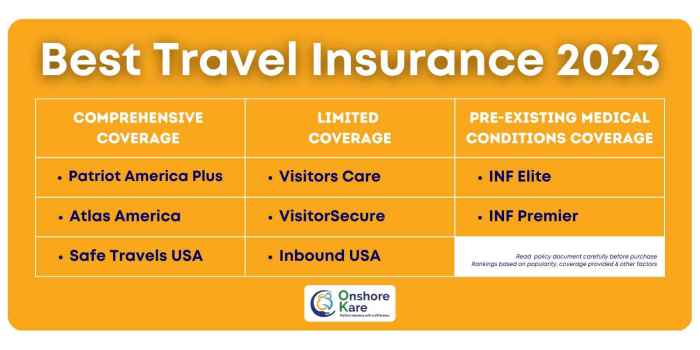
Planning an international adventure in 2024? Securing the right travel insurance is paramount. This guide navigates the complexities of choosing the best policy, comparing plans from leading providers, and understanding the crucial factors to consider before you embark on your journey. From comprehensive coverage options to navigating the claims process, we’ll equip you with the knowledge to make an informed decision and travel with peace of mind.
We’ll explore various plan types, highlight key features and price ranges of top providers, and delve into the nuances of coverage for pre-existing conditions, adventure activities, and trip cancellations. We’ll also share practical travel hacks, photography tips, and essential advice for international travel, ensuring your trip is both safe and memorable.
Best Travel Insurance for International Trips in 2024
Planning an international trip requires careful consideration of various factors, and securing comprehensive travel insurance is paramount. Unexpected events can significantly impact your journey, from medical emergencies to trip cancellations, making adequate insurance a crucial investment for peace of mind. This overview will highlight top providers and essential considerations for choosing the right plan for your needs in 2024.
Top 5 Travel Insurance Providers for International Trips in 2024
Choosing the right travel insurance provider can be challenging given the wide variety of options available. The following table summarizes five leading providers, showcasing their key features, coverage highlights, and price ranges. Remember that specific coverage and pricing will vary depending on your destination, trip length, and chosen plan.
| Provider | Key Features | Coverage Highlights | Price Range |
|---|---|---|---|
| World Nomads | Adventure sports coverage, 24/7 emergency assistance, flexible plans | Medical expenses, trip cancellations, lost luggage, emergency evacuation | $30 – $150+ per trip |
| Allianz Travel | Wide range of plans, comprehensive coverage options, global assistance network | Medical expenses, trip interruptions, baggage delays, personal liability | $20 – $200+ per trip |
| Travel Guard | Pre-existing condition coverage options, robust cancellation coverage, various plan types | Medical expenses, trip cancellations, baggage loss, 24/7 assistance | $30 – $150+ per trip |
| SafetyWing | Nomad-friendly, affordable, monthly subscription option | Medical expenses, trip interruptions, emergency medical evacuation | $40 – $60+ per month |
| IMG Global | Comprehensive coverage, strong reputation, specialized plans for various needs | Medical expenses, trip cancellations, emergency medical evacuation, repatriation | $40 – $200+ per trip |
Types of Travel Insurance Plans and Their Suitability
Travel insurance plans cater to diverse travel styles and durations. Understanding the different types is crucial for selecting the most appropriate coverage.
Single-trip plans are ideal for one-time international journeys. They provide coverage for the specific duration of your trip. For example, a two-week backpacking trip through Southeast Asia would benefit from a single-trip plan.
Annual multi-trip plans are best suited for frequent travelers who undertake multiple international trips within a year. These plans offer continuous coverage throughout the policy period. Someone who travels internationally for business several times a year would find this type of plan cost-effective.
Backpacker plans are designed for budget-conscious travelers who engage in more adventurous activities. These plans often include coverage for activities like hiking and trekking, which may be excluded from standard plans. A young traveler spending a year exploring South America would likely find a backpacker plan suitable.
Factors to Consider When Choosing Travel Insurance
Several factors significantly influence the selection of travel insurance. Careful consideration of these aspects will ensure you have adequate protection.
Pre-existing conditions: Some insurers offer coverage for pre-existing conditions, but often require disclosure and may have limitations. It’s crucial to check the policy details to understand the extent of coverage for any pre-existing medical conditions.
Adventure activities: If you plan on engaging in adventurous activities such as skiing, scuba diving, or mountaineering, you’ll need a plan that specifically covers these activities. Standard plans often exclude or limit coverage for high-risk activities.
Trip cancellation reasons: Travel insurance policies typically cover trip cancellations due to unforeseen circumstances such as illness, severe weather, or family emergencies. However, the specific reasons for cancellation and the extent of coverage vary among providers, so careful review of the policy wording is essential. For example, a policy might cover cancellation due to a sudden illness but not due to a change of mind.
Comparing Travel Insurance Plans
Choosing the right travel insurance is crucial for peace of mind during international trips. A comprehensive plan can protect you from unexpected events, such as medical emergencies, trip cancellations, and lost luggage. However, with numerous providers and plans available, comparing options is essential to find the best fit for your needs and budget. This section compares three distinct travel insurance plans, highlighting their coverage, pricing, and claims processes.
Understanding the nuances of different travel insurance plans is key to making an informed decision. Factors like pre-existing conditions, trip length, and activity levels significantly impact the suitability of a particular plan. The following comparison considers these aspects to provide a clearer picture.
Travel Insurance Plan Comparison
This section compares three hypothetical travel insurance plans – Plan A from World Nomads, Plan B from Allianz Travel, and Plan C from Travelex. These are for illustrative purposes and specific details may vary based on the exact policy purchased. Always refer to the provider’s website for the most up-to-date information.
- Plan A (World Nomads): This plan often emphasizes adventure activities and offers robust coverage for these activities. It tends to be competitively priced for younger, active travelers. However, coverage for pre-existing conditions may be limited, and the maximum payout for certain events might be lower than other plans.
- Plan B (Allianz Travel): Allianz is known for its comprehensive coverage, often including a wider range of benefits, such as emergency medical evacuation and repatriation. It might be more expensive than Plan A, but it provides greater peace of mind, particularly for older travelers or those with pre-existing conditions (provided these are disclosed and accepted). However, the claims process might be slightly more complex.
- Plan C (Travelex): Travelex often presents a balance between price and coverage. It offers a solid level of protection for common travel disruptions, such as trip cancellations and lost luggage. While not as extensive as Plan B, it provides adequate coverage for most travelers at a more affordable price point. Their claims process is generally straightforward.
Claims Process Comparison
The claims process varies significantly between providers. Understanding the requirements and timelines is essential for a smooth experience in case of an unforeseen event.
- Plan A (World Nomads): World Nomads typically requires a detailed claim form, supporting documentation (e.g., medical bills, police reports), and potentially photos or videos depending on the nature of the claim. Processing time is generally estimated to be within a few weeks, but this can vary.
- Plan B (Allianz Travel): Allianz’s claims process may involve more documentation, particularly for medical claims. They often require detailed medical reports and invoices. Processing time may be longer than Plan A, potentially taking several weeks to a couple of months depending on the complexity of the claim.
- Plan C (Travelex): Travelex usually has a relatively straightforward claims process. They typically require a completed claim form and relevant supporting documents. Processing times are generally quicker than Allianz, often completed within a few weeks.
Hypothetical Travel Scenario and Insurance Plan Selection
Let’s consider a hypothetical scenario: A couple, aged 55 and 60, are planning a three-week trip to Southeast Asia, including trekking in Nepal and exploring bustling cities. They have pre-existing medical conditions (mild hypertension and arthritis).
In this scenario, Plan B (Allianz Travel) would be the most suitable option. The couple’s age and pre-existing conditions necessitate a plan with comprehensive medical coverage, including emergency medical evacuation, which is a key feature of Plan B. The trekking in Nepal adds another layer of risk, making robust coverage essential. While Plan B might be more expensive, the peace of mind it offers outweighs the higher cost, especially given the potential for significant medical expenses in a remote location.
The slightly more complex claims process is a secondary concern compared to the comprehensive protection offered.
Travel Hacks for International Trips

Navigating international travel can be both exhilarating and overwhelming. However, with a little planning and the right strategies, you can significantly reduce stress and boost your travel experience. This section Artikels practical hacks for saving money and time, optimizing your trip preparation, and making the most of your international adventure.
Ten Practical Travel Hacks
Smart travelers know that a well-planned trip is a successful trip. These ten hacks cover essential aspects of international travel, from pre-departure preparations to on-the-ground strategies. Applying even a few of these can make a significant difference.
- Utilize travel aggregators: Websites like Google Flights and Skyscanner allow you to compare flight prices across multiple airlines, often uncovering hidden deals.
- Book flights and accommodation in advance: Securing your travel arrangements early, especially during peak season, generally leads to better prices and more availability.
- Be flexible with your travel dates: Shifting your travel dates by a day or two can sometimes result in substantial savings on flights and accommodation.
- Consider alternative airports: Flying into smaller, less popular airports near your destination can often be cheaper than using major international hubs.
- Pack light: Minimize checked baggage to avoid hefty fees. A well-packed carry-on can significantly reduce your overall travel costs.
- Take advantage of free activities: Many destinations offer free or low-cost attractions, such as parks, museums (on certain days), and walking tours.
- Use public transportation: Opt for buses, trains, or subways whenever possible; it’s usually cheaper and often a more immersive way to experience a city.
- Eat like a local: Explore local markets and smaller restaurants for authentic and affordable meals. Avoid tourist traps.
- Learn basic phrases in the local language: Even a few basic phrases can enhance your interactions with locals and potentially lead to better deals or assistance.
- Utilize travel rewards programs: Sign up for airline and hotel loyalty programs to earn points or miles that can be redeemed for future travel.
Travel Booking Platforms and Tools
Choosing the right platform for booking flights and accommodation significantly impacts your travel budget and overall experience. Different platforms offer varying strengths and weaknesses.Several popular online travel agencies (OTAs) exist, each with its own advantages and disadvantages. For example, Expedia and Booking.com are known for their wide selection and user-friendly interfaces, but they might not always offer the absolute lowest prices.
Directly booking with airlines and hotels can sometimes yield better deals, especially if you’re a member of a loyalty program. However, this requires more research and potentially more time spent comparing prices. Specialized platforms focusing on budget travel, such as Hostelworld or Airbnb, offer different options for accommodation tailored to specific needs and budgets. Ultimately, the best approach is to compare prices across multiple platforms before making a decision.
Efficient Packing for International Trips
Packing light is a crucial aspect of stress-free and cost-effective international travel. Overpacking leads to extra baggage fees and makes navigating airports and public transportation more challenging.The key to efficient packing is careful planning and selection. Create a packing list based on your itinerary and the expected weather conditions. Choose versatile clothing items that can be mixed and matched to create multiple outfits.
Roll your clothes instead of folding them to save space and minimize wrinkles. Utilize packing cubes to organize your belongings and maximize space within your luggage. Consider using travel-sized toiletries to avoid exceeding liquid restrictions and save weight. Prioritize essential items and leave behind anything non-essential. Remember, you can always buy items you need at your destination if necessary.
By following these tips, you can pack efficiently and minimize baggage fees, making your journey smoother and more enjoyable.
Travel Photography Tips and Techniques
Capturing stunning travel photographs isn’t just about pointing and shooting; it’s about understanding the interplay of light, composition, and moment. This section provides a step-by-step guide to elevate your travel photography, transforming snapshots into captivating memories. We’ll explore essential techniques and styles to help you capture the essence of your adventures.
Step-by-Step Guide to Stunning Travel Photographs
Mastering travel photography involves a thoughtful process, from planning to post-processing. The following steps will help you consistently create impactful images.
- Planning and Preparation: Research your destination beforehand, identifying potential photo opportunities and considering the best times of day for lighting. Pack appropriately – bring extra batteries, memory cards, and any necessary cleaning supplies. Consider the weather forecast and pack accordingly.
- Composition: Utilize the rule of thirds, placing your subject off-center for a more visually appealing image. Experiment with leading lines, symmetry, and framing to add depth and interest. Consider the negative space around your subject to enhance its impact.
- Lighting: The golden hour (sunrise and sunset) provides warm, soft light ideal for landscapes and portraits. Avoid harsh midday sun, which can create strong shadows and washed-out colors. Utilize natural light whenever possible, but be prepared to use a flash or external lighting in low-light situations.
- Focus and Sharpness: Ensure your subject is in sharp focus by using a fast shutter speed, especially when shooting moving subjects. Experiment with different aperture settings to control depth of field, blurring backgrounds or foregrounds as needed.
- Editing: Post-processing enhances your images, but avoid over-editing. Use software like Adobe Lightroom or Photoshop to adjust brightness, contrast, saturation, and sharpness. Crop your images to improve composition and remove unwanted elements. Remember to maintain a natural look.
Different Photographic Styles for Travel
Travel photography encompasses a wide range of styles, each suited to different experiences and subjects.
- Landscape Photography: This style focuses on capturing the vastness and beauty of natural environments. Emphasize expansive views, dramatic skies, and interesting textures. Use a wide-angle lens to capture the scale of the landscape.
- Portrait Photography: Capture the essence of people you encounter on your travels. Obtain permission before taking photos, and focus on capturing genuine expressions and emotions. Use a telephoto lens for flattering portraits and to maintain a respectful distance.
- Street Photography: This involves capturing candid moments of everyday life in urban environments. Be discreet and respectful, focusing on interesting compositions and human interactions. A fast shutter speed is crucial for capturing fleeting moments.
- Architectural Photography: This style highlights the beauty and detail of buildings and structures. Use a wide-angle lens to capture the entire structure, or a telephoto lens to focus on specific details. Consider the light and shadows to enhance the architectural features.
Visual Itinerary for a Photography-Focused Trip
Imagine a ten-day trip to Southeast Asia, specifically focusing on capturing diverse photographic styles.
| Day | Location | Photographic Style | Description |
|---|---|---|---|
| 1-3 | Hoi An, Vietnam | Street Photography, Architectural Photography | Capture the vibrant street life and ancient architecture of Hoi An’s ancient town. Focus on details like lanterns and intricate carvings. |
| 4-5 | Ha Long Bay, Vietnam | Landscape Photography | Photograph the stunning limestone karsts and emerald waters of Ha Long Bay, capturing both wide-angle shots and detailed textures. |
| 6-7 | Siem Reap, Cambodia | Architectural Photography, Portrait Photography | Explore the magnificent Angkor Wat temple complex, capturing its scale and intricate details. Photograph local people with their permission, focusing on their expressions and interactions. |
| 8-10 | Luang Prabang, Laos | Landscape Photography, Portrait Photography | Capture the serene beauty of Luang Prabang’s temples and surrounding landscapes. Photograph monks and local people, focusing on their daily routines and traditions. |
Essential Travel Tips for International Travelers
Planning an international trip is exciting, but ensuring a safe and enjoyable experience requires careful preparation. This section Artikels essential tips to help you navigate the complexities of international travel, focusing on safety, health, and cultural sensitivity. These tips are designed to minimize potential problems and maximize your travel experience.
| Tip | Explanation |
|---|---|
| Inform someone of your itinerary | Share your detailed travel plans, including flight information, accommodation details, and planned activities, with a trusted friend or family member back home. This ensures someone knows your whereabouts and can contact authorities if necessary. |
| Make copies of important documents | Create photocopies of your passport, visa, driver’s license, travel insurance policy, and other crucial documents. Store these copies separately from the originals, ideally in a secure location like a cloud storage service or a hotel safe. This protects you in case of loss or theft. |
| Register with your embassy or consulate | Many countries encourage or require citizens to register with their embassy or consulate upon arrival. This allows them to contact you in emergencies and provide assistance if needed. |
| Stay aware of your surroundings | Maintain situational awareness at all times. Be mindful of your belongings and avoid displaying expensive jewelry or electronics openly. Trust your instincts; if a situation feels unsafe, remove yourself from it. |
| Learn basic phrases in the local language | Knowing even a few basic phrases like “hello,” “thank you,” and “excuse me” can significantly improve interactions with locals and show respect for their culture. |
| Understand local customs and etiquette | Research the cultural norms and traditions of your destination before you travel. This includes understanding appropriate dress codes, social interactions, and dining customs. |
| Pack appropriate clothing and medications | Check the weather forecast and pack clothing suitable for the climate. Bring any necessary prescription medications with you, ensuring you have sufficient quantities for the duration of your trip and a copy of your prescription. |
| Protect yourself from illness | Consult your doctor about necessary vaccinations and recommended health precautions for your destination. Practice good hygiene, drink bottled water, and avoid consuming uncooked food. |
| Use reputable transportation | Opt for established and reputable transportation services like taxis, ride-sharing apps, or public transportation. Avoid using unofficial or unlicensed services, especially at night. |
| Keep your valuables secure | Use hotel safes for passports and other important documents. Avoid carrying large sums of cash and use credit cards or debit cards whenever possible. Be cautious about pickpockets in crowded areas. |
Researching Destination-Specific Regulations and Customs
Thorough research into destination-specific regulations and customs is paramount for a smooth and problem-free trip. This involves understanding visa requirements, local laws, cultural sensitivities, and any potential health risks. For example, failing to research local laws regarding alcohol consumption could lead to unexpected legal consequences. Similarly, unawareness of cultural customs regarding dress or public behavior could lead to unintentional offense.
Checking official government websites and reputable travel guides is crucial for acquiring this information.
Obtaining Necessary Travel Visas and Documents
Securing the necessary travel visas and documents is a critical step in international travel planning. This process typically involves determining visa requirements based on your nationality and destination, gathering the necessary supporting documents (such as proof of accommodation, flight itineraries, and financial statements), completing the visa application form accurately, and submitting the application through the appropriate channels (either online or at a consulate/embassy).
Processing times vary significantly depending on the country and the type of visa applied for, so it’s crucial to begin this process well in advance of your planned travel dates. Failure to obtain the required visa could result in being denied entry to your destination country.
Urban Escapes and Vacation Packages
Planning an urban escape or a pre-packaged vacation offers diverse options for travelers seeking exciting adventures and memorable experiences. The choice between these options depends largely on personal preferences, budget, and desired level of control over travel arrangements. This section explores various urban destinations and vacation packages, comparing their features and benefits to help you make an informed decision.
Choosing the right urban escape or vacation package hinges on a careful consideration of your budget, preferred travel style, and desired level of pre-planning. Factors such as the length of stay, included activities, and the level of flexibility desired all play a crucial role in making the best choice.
Exciting Urban Escape Destinations
Urban escapes cater to a wide range of budgets and travel styles. From budget-friendly backpacking adventures to luxurious getaways, there’s a city waiting to be explored.
- Budget-Friendly: Budapest, Hungary; offers stunning architecture, thermal baths, and delicious cuisine at affordable prices. Krakow, Poland; boasts a rich history, vibrant nightlife, and a charming Old Town, all within a budget-conscious traveler’s reach. Lisbon, Portugal; combines historical charm with modern amenities and delicious seafood, providing a cost-effective European experience.
- Mid-Range: Barcelona, Spain; combines stunning architecture with beautiful beaches and a vibrant culinary scene. Prague, Czech Republic; offers a fairytale-like atmosphere with iconic castles, charming bridges, and world-class beer gardens. Kyoto, Japan; presents a blend of traditional culture and modern amenities, providing a unique and enriching experience at a reasonable cost.
- Luxury: Dubai, UAE; offers opulent hotels, world-class shopping, and breathtaking architecture. Singapore; boasts luxurious accommodations, Michelin-starred restaurants, and stunning gardens. New York City, USA; provides access to high-end shopping, fine dining, and Broadway shows, delivering an unforgettable luxury experience.
Comparison of Vacation Packages
Pre-packaged vacations offer convenience and often better value for money, especially for popular destinations. However, understanding the inclusions and exclusions is crucial.
| Destination | Package Type | Inclusions | Price Point (Approximate) |
|---|---|---|---|
| Bali, Indonesia | 7-day All-Inclusive Resort Stay | Accommodation, meals, activities (yoga, surfing lessons), airport transfers | $1500 – $3000 per person |
| Paris, France | 5-day City Break | Accommodation, guided tours (Eiffel Tower, Louvre Museum), transportation pass | $1000 – $2500 per person |
| Rome, Italy | 10-day Cultural Tour | Accommodation, guided tours (Colosseum, Vatican City), food tours, internal transportation | $2000 – $4000 per person |
Note: Price points are estimates and can vary significantly based on the season, hotel choice, and specific inclusions.
Pre-Packaged Vacations vs. Independent Travel
The decision to book a pre-packaged vacation or plan a trip independently depends on individual preferences and priorities. Each option has distinct advantages and disadvantages.
| Feature | Pre-Packaged Vacation | Independent Travel |
|---|---|---|
| Convenience | High – Everything is planned | Low – Requires significant planning and booking |
| Cost | Can be more expensive, but often offers better value for money | Can be cheaper, but requires more research and potentially higher individual costs |
| Flexibility | Low – Itinerary is fixed | High – Itinerary can be customized |
| Stress Level | Low – Less planning required | High – Requires more effort and potential for unforeseen issues |
Travel Visa Requirements and Procedures
Securing the correct visa is a crucial step in planning any international trip. Failure to obtain the necessary documentation can lead to significant delays, denied entry, and considerable inconvenience. Understanding the visa application process for your destination country is therefore paramount. This section will Artikel the process for obtaining a French Schengen Visa, providing a clear example of the requirements and procedures involved.
The process of obtaining a travel visa varies significantly depending on your nationality and your destination country. Generally, it involves completing an application form, gathering supporting documentation, paying the applicable fees, and attending an interview (sometimes). The time required to process an application can also vary widely, ranging from a few days to several weeks or even months.
Therefore, it’s vital to apply well in advance of your intended travel dates.
French Schengen Visa Requirements
The Schengen Area comprises 26 European countries that have abolished passport control at their mutual borders. A Schengen visa allows travel within this area for a specified period. Obtaining a French Schengen visa is a common example, as France is a popular tourist destination and a frequent entry point to the Schengen Area.
To apply for a French Schengen visa, you will typically need the following:
- A completed and signed visa application form.
- A valid passport with at least three months validity remaining after your intended return date.
- Two passport-sized photographs meeting specific requirements (e.g., size, background, expression).
- Proof of travel medical insurance with a minimum coverage of €30,000.
- Proof of sufficient funds to cover your stay (e.g., bank statements, proof of employment).
- A confirmed round-trip flight reservation.
- A detailed itinerary of your planned trip, including accommodation details.
- Proof of accommodation (e.g., hotel booking confirmations).
The specific requirements may vary slightly depending on your individual circumstances. For instance, students may need to provide proof of enrollment and financial support from their parents or institution. Employees might need a letter from their employer confirming their employment and leave of absence. It is crucial to check the official website of the French embassy or consulate in your country for the most up-to-date and accurate information.
Types of French Visas and Eligibility Criteria
France offers several types of visas, each with specific eligibility criteria. The Schengen visa, discussed above, is the most common type for tourism and short-term stays (up to 90 days within a 180-day period). Other types include long-stay visas for work, study, or family reunification, each requiring different documentation and a more extensive application process.
Eligibility for a specific visa type depends on the purpose of your visit and your personal circumstances. For example, a tourist visa requires evidence of sufficient funds and a clear itinerary, while a work visa necessitates a job offer from a French employer and potentially a work permit. The French embassy or consulate will assess your application based on the specific requirements of the visa type you are applying for.
Tips for a Smooth Visa Application Process
Applying for a visa can be a complex process. To ensure a smooth application, consider the following:
Begin your application well in advance of your planned trip. Allow ample time for processing, as delays can occur. Carefully review all the required documents and ensure that you provide accurate and complete information. Any inconsistencies or missing documents can lead to delays or rejection of your application. Keep copies of all submitted documents for your records.
If you have any questions, contact the French embassy or consulate directly for clarification. Consider using a visa application service if you need assistance with the process. These services can help navigate the complexities of visa applications and increase the chances of a successful outcome.
Venture Capital in the Travel Industry
The travel industry, constantly evolving with technological advancements and shifting consumer preferences, has become a fertile ground for venture capital investment. Significant funding is flowing into travel technology startups, promising to reshape how we plan, book, and experience travel. This influx of capital fuels innovation and accelerates the adoption of new technologies, ultimately benefiting both travelers and the industry as a whole.Venture capital investments are driving significant changes in the travel sector, impacting everything from booking platforms to sustainable tourism initiatives.
This influx of capital not only provides crucial financial resources for growth but also brings valuable expertise and strategic guidance to emerging companies. The resulting innovations often lead to improved user experiences, increased efficiency, and the creation of entirely new travel-related services.
Recent Venture Capital Investments in Travel Technology
Three recent examples illustrate the significant venture capital activity in the travel technology sector. These investments highlight the diverse areas within the industry attracting funding and the potential for transformative impact.
- Example 1: [Company Name A] – Focus on Sustainable Travel: [Company Name A], a platform connecting travelers with eco-friendly accommodations and experiences, recently secured [Amount] in Series [Series Round] funding. This investment will likely accelerate their expansion into new markets and enhance their platform’s features, promoting sustainable tourism practices and offering travelers more conscious choices.
- Example 2: [Company Name B] – AI-Powered Travel Planning: [Company Name B], developing an AI-powered travel planning tool, received [Amount] in seed funding. This funding will allow them to refine their AI algorithms and expand their database, ultimately providing users with highly personalized and efficient travel itineraries.
- Example 3: [Company Name C] – Hyper-Personalized Travel Experiences: [Company Name C], specializing in curated and hyper-personalized travel experiences, secured [Amount] in Series [Series Round] funding. This investment will enable them to scale their operations, further develop their personalized recommendations engine, and potentially expand into new niche travel segments.
Challenges and Opportunities for Travel Startups Seeking Funding
Securing venture capital funding presents both significant challenges and exciting opportunities for travel startups. The competitive landscape, coupled with the need to demonstrate a clear path to profitability, necessitates a well-defined business model and a compelling value proposition.The challenges include demonstrating market viability, attracting and retaining top talent, navigating regulatory hurdles, and managing cash flow effectively during the initial growth phase.
However, the opportunities are equally compelling. The travel industry’s vast market size and continuous evolution offer considerable potential for growth and return on investment. Strong leadership, innovative technology, and a scalable business model are key factors that attract venture capital funding.
Trends Shaping the Future of the Travel Industry and the Role of Venture Capital
Several key trends are shaping the future of the travel industry, with venture capital playing a crucial role in driving innovation and accelerating their adoption. These trends include the rise of sustainable and responsible travel, the increasing importance of personalization and customization, the integration of artificial intelligence and machine learning, and the growing demand for seamless and integrated travel experiences.Venture capital is instrumental in fostering these trends.
Investments in companies focused on sustainable tourism practices, personalized travel planning tools, and AI-powered travel platforms are accelerating the transition towards a more efficient, sustainable, and personalized travel ecosystem. The continued flow of venture capital into the travel technology sector is expected to further fuel innovation and shape the future of the industry.
Choosing the right travel insurance is a crucial step in planning a successful international trip. By understanding your needs, comparing plans thoroughly, and considering factors like pre-existing conditions and adventure activities, you can secure the coverage that provides the peace of mind you deserve. Remember to pack smart, research your destination, and embrace the journey – with the right insurance, you’re ready for anything!
FAQ Section
What is the difference between single-trip and annual multi-trip insurance?
Single-trip insurance covers one specific trip, while annual multi-trip insurance covers multiple trips within a year.
Does travel insurance cover pre-existing conditions?
Some policies offer coverage for pre-existing conditions, but it often requires purchasing additional coverage and disclosing the condition during application.
What should I do if I need to file a claim?
Contact your insurance provider immediately, gather necessary documentation (like receipts and medical reports), and follow their claims process Artikeld in your policy documents.
How much travel insurance do I need?
The amount of coverage needed depends on the trip’s length, destination, activities, and your personal risk tolerance. Consider the cost of potential emergencies and trip disruptions.
Can I cancel my trip and get a refund?
Trip cancellation coverage is often available, but specific reasons for cancellation and the refund amount vary based on your policy. Review your policy’s terms and conditions.